Mercenaries have never completely disappeared from the battlefield. From the Landsknechts to the Swiss Guards, passing through foreign volunteers integrated into national armed forces like the French Foreign Legion and the Spanish Tercio, these irregular figures date back to the dawn of conflicts, and their condition has always offered the same advantages. First of all, from a work standpoint, mercenaries themselves, in order to wage war and earn a good living, do not have to wait for their country to participate in a conflict, but can always find an opportunity to fight. The biggest advantage, however, is for those who hire them. Mercenaries can be liquidated within 24 hours and it can be ensured that they will never denounce violations of rights or atrocities, since they would be the first to suffer; above all, no one has to account for their deaths or for the actions these war professionals carry out in the field, which are theoretically not attributable to the responsibilities of states.

However, in recent years, mercenaries have lost their traditional condition of “almost invisibility” to become real and proper bodies of the army, in addition to the regular ones: therefore, the idea is increasingly widespread that their actions should be answered for by the states that use them, even if governments continue to play the card of “they are not mine.”

In the United States they are called contractors, and they fought the last wars in Afghanistan and Iraq; in Russia, they are the “collaborators” of the Wagner Group, who, in addition to being present in several African countries, are fighting on the front lines in the Russo-Ukrainian war. Both of these realities have several dark sides. Just think of the ambiguities of Dick Cheney, Vice President of the USA during the time of George W. Bush, who favored Halliburton, a giant in the sector of equipment and contractors, for supplies. Even more opaque is the history of the Russian Wagner Group, founded in 2013 by the oligarch Evgeny Prigozhin, active in catering, together with former intelligence colonel Dmitry Utkin, who sympathizes with Nazism. Prigozhin’s proximity to the Kremlin has led his activities to transform, from catering to wars.

Today, the Wagner Group’s mercenaries are active in half of Africa: Amnesty International has repeatedly reported their massacres and violations of human rights. In the last two years, in addition to managing gold mines and training local troops, they have played a role in all the coups that have taken place on the continent, from Mali to Burkina Faso to Sudan. This is a veritable force of destabilization that formally answers to no one and acts without respecting any rules.

It is incredible that almost nothing is known (and said) about the fact that a mercenary group is deposing governments and spreading terror across a continent. Perhaps this silence arises from the fact that the figure of the mercenary-contractor is useful not only to the Russians and their Chinese partners in Africa, but represents a new frontier of global warfare, because the system of international law provides that states or people who officially embody them are the ones most affected. Instead, mercenaries remain anonymous, have no personal ambitions, and officially do not fight for anyone.

It is yet another paradox of our times. Regular armies are often stiffened by increasingly stringent rules, while conflicts on the field are fought using outlaw forces. The peoples who suffer the consequences are not even consoled by the knowledge that justice will one day be done.
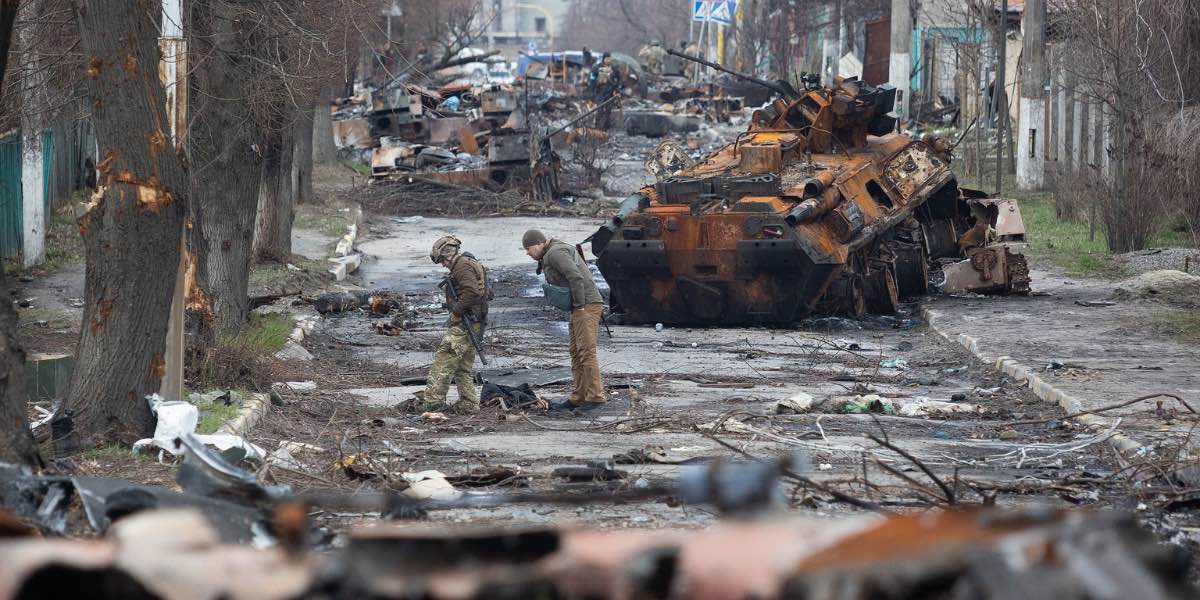
Dopo i primi mesi di caos economico e di timori generalizzati sui rifornimenti energetici e sul mercato dei cereali, e anche sul rischio che lo scontro potesse degenerare in un conflitto nucleare, il mondo sembra ora avere metabolizzato la guerra in corso in Ucraina. Una guerra che resta un mix di vecchio – anzi, di molto vecchio – e di nuovo. Una guerra di conquista territoriale che ha anche risvolti etnici, con la “difesa” delle minoranze russofone in Ucraina, che si combatte all’ultimo sangue, addirittura in trincea, come non capitava dalla Prima guerra mondiale. D’altra parte, questa è anche una guerra moderna nella quale si usano droni e armamenti sofisticati, che possono così essere messi in mostra anche sul piano commerciale come non capitava da molto tempo. Dal punto di vista militare, la superiorità numerica e missilistica della Russia è stata pareggiata grazie alle moderne armi cedute dai Paesi Nato al più modesto esercito ucraino. Ne è derivata una situazione di stallo che oggi non lascia intravedere vie di uscita, se non il prolungamento di un conflitto che, nel frattempo, sta radendo al suolo l’economia e le infrastrutture ucraine e rovinando economicamente la Russia, che comincia a sentire il peso dell’embargo imposto dall’Occidente: Mosca non poteva immaginare che l’Europa, in così poco tempo, sarebbe riuscita a ridurre ai minimi termini la sua dipendenza energetica dal gas siberiano.

In realtà, tutto il conflitto è un grande concentrato di malintesi e di calcoli sbagliati, a partire dalla convinzione, smentita dai fatti, che l’Ucraina si sarebbe arresa poche ore dopo l’invasione russa e che la dipendenza dal gas importato avrebbe legato le mani all’Unione Europea. Ma ciò non può distogliere l’attenzione dal fatto che nulla è cambiato rispetto agli schieramenti internazionali di un anno fa. L’embargo economico contro Mosca è stato decretato dal 19% degli Stati del mondo, che rappresentano però il 59% dell’economia mondiale. Restano ancora fuori tre giganti, tra l’altro membri dei Paesi Brics, come la Russia: India, Cina e Brasile. In questo primo anno di guerra, ciò è bastato perché la Russia non restasse senza ossigeno, ma ora cominciano a farsi pesanti le conseguenze delle sanzioni, con una flessione del PIL russo stimata in 4-6 punti percentuali per il 2023, che andrà ad aggiungersi al meno 3% circa del 2022.

Sul fronte della pace, invece, va registrato che al momento ci sono solo due proposte sul tavolo: quella avanzata da Zelensky all’ONU, che ha il peccato originale di essere stata proposta da una delle parti in guerra, e quella cinese, alla quale sia i Paesi Brics sia l’Europa stanno prestando attenzione. Dalle potenze che fino a oggi hanno permesso all’Ucraina di reggere militarmente, cioè dagli USA, dal Regno Unito e dall’UE, ancora non è arrivato nulla. Come se questi Paesi pensassero, ipotesi altamente improbabile, che la guerra possa risolversi sul campo a favore dell’Ucraina.

È questa impasse, una mancanza generalizzata di volontà negoziale, che sta relegando la guerra in Ucraina tra le notizie di secondo piano. Come accadde per la guerra in Iraq o per quella in Afghanistan, ormai si dà per scontato che lo scontro andrà per le lunghe e ci si concentra quindi su altre questioni. Invece, questo conflitto non solo è potenzialmente molto più pericoloso degli altri, ma potrebbe anche essere il primo di una lunga serie, destinata a sancire i confini tra la sfera d’influenza geopolitica dell’Europa occidentale e quella della Russia: un tema del quale non si è mai voluto discutere dopo la fine della Guerra fredda, perché la tanto evocata conferenza per la pace e la sicurezza tra l’Europa e la Russia, diventata una repubblica democratica dopo il 1991, non c’è mai stata. Abbiamo avuto la fine del Patto di Varsavia da una parte, la crescita della Nato dall’altra; e una Russia integrata velocemente nello spazio economico europeo ma sempre tenuta ai margini dello spazio politico.

Sono ancora molte le cose che questo conflitto racconta: eppure, a meno di sconvolgenti novità, ne sentiremo parlare sempre di meno. Perché il nostro mondo è fatto così, si sfugge dal trovare una risposta alla complessità per ripararsi nel quotidiano. Un “giorno per giorno” che non risolve nulla e che, anzi, esaspera i problemi.

Da anni ormai se ne parla e, secondo alcune leggende metropolitane, leader come Gheddafi o Saddam Hussein sarebbero stati deposti proprio per questo motivo: evocare l’abbandono del dollaro USA come moneta di riferimento internazionale, più che un’ipotesi percorribile, finora ha avuto il valore di una provocazione. Qualcosa, però, sta cambiando. Le riserve monetarie globali, che nel 1970 erano costituite per l’80% da dollari, oggi vedono la moneta statunitense prevalere sì, ma con una quota ridotta al 60%. Questo per via della nascita dell’euro, che ormai costituisce il 20% delle riserve globali, della “tenuta” di sterlina e yen, che hanno conservato il loro peso, e dell’ingresso in classifica dello yuan, la valuta cinese.

Intanto, a livello globale le transazioni commerciali si effettuano ancora per l’88% in dollari. Tuttavia, la banca centrale cinese ha calcolato che le transazioni in yuan nel 2022 hanno superato i 6mila miliardi di dollari, facendo segnare il quinto anno consecutivo di crescita dell’uso della moneta asiatica. Per Pechino, far acquisire un ruolo importante alla propria valuta è una priorità di politica estera, finalizzata a confermare il ruolo centrale conquistato nell’economia-mondo. Per scalzare progressivamente dagli scambi commerciali le banconote verdi di Washington, la migliore arma in mano alla Cina sono i rapporti con i Paesi suoi clienti in Asia, America Latina e Africa. Questi Paesi accettano volentieri valuta cinese, potendo pagare a loro volta in valuta locale che, di solito, non viene accettata da nessuno. È quello che sta già succedendo con l’Argentina, grande fornitore della Cina, che ormai nelle sue riserve valutarie ha l’equivalente di 20 miliardi di dollari in yuan.

Il risultato più significativo della strategia cinese è stato raggiunto a fine marzo, con la firma di un accordo con il Brasile che estromette il dollaro dalle transazioni tra i due Paesi (nel 2022 pari a circa 150 miliardi di dollari). Per consentire l’uso dello yuan negli scambi tra i due giganti è stata creata una camera di compensazione presso la Banca industriale e commerciale cinese: la banca garantisce agli imprenditori brasiliani l’immediata conversione in real dei loro guadagni se decideranno di concludere affari in yuan.

L’altro Paese con il quale la Cina conduce scambi monetariamente alla pari è la Russia, per ovvi motivi, dall’inizio della guerra in Ucraina. Ed è così che, per l’interesse a consolidare un rapporto commerciale o per necessità, come nel caso della Russia sotto sanzioni, lo yuan ha cominciato a diventare moneta di riferimento per i Paesi Brics e, di conseguenza, per quel vasto mondo fuori dall’Occidente che ha nella Cina il suo vitale interlocutore economico.

Al momento, il ruolo del dollaro negli scambi internazionali non è in discussione. Per lo yuan la quota del 7% raggiunta nel 2022 è un segnale di forte crescita, quasi il doppio rispetto all’anno prima, ma la strada rimane ancora lunga e resta impervia: come può diventare moneta di riferimento la valuta di un Paese nel quale la Banca centrale non è indipendente dal governo e la politica monetaria è asservita ai bisogni immediati dello Stato, che da anni tenta di nascondere diverse bolle pronte a scoppiare? Ma la Cina ci ha già stupiti, dimostrando la possibilità di convivenza tra un regime socialista e spietate logiche di mercato, salvo scoprire che dietro i giganti dell’industria e della finanza cinese c’è sempre, ben visibile o nascosto, lo Stato. La sfida per fare entrare lo yuan nel ristretto gruppo delle valute internazionali ha valore sia simbolico sia pratico. Da un lato, la Cina vorrebbe confermare di essere diventata una potenza globale, dall’altro comincia a prendere le distanze dall’economia degli Stati Uniti, perlomeno tentando di interrompere una storica relazione simbiotica.

FILE PHOTO: Coins and banknotes of China’s yuan are seen in this illustration picture taken February 24, 2022. REUTERS/Florence Lo/Illustration

Una delle lezioni che la Cina ha imparato dalla pandemia è che la sua centenaria politica di isolazionismo politico non paga più. Che gli spazi d’azione per una potenza globale che, in realtà, è tale solo dal punto di vista commerciale, si fanno molto stretti, quando gli Stati tornano prepotentemente sulla scena. La leadership cinese, dopo la conferma al potere di Xi Jinping per il terzo mandato, si sente legittimata a svolgere un ruolo politico andando a coprire il ruolo, rimasto vacante dopo la fine dell’Unione Sovietica, di contrappeso agli Stati Uniti. Lo stesso Joe Biden, all’ultimo G20, ha riconosciuto al Paese asiatico lo status di superpotenza, auspicando che Stati Uniti e Cina insieme possano garantire la normalizzazione del commercio mondiale in un contesto internazionale stabile. Pechino pare abbia ascoltato. A metà marzo, nel discorso di presentazione delle tre iniziative cinesi sullo sviluppo, la sicurezza e la civiltà globale, Xi Jinping ha ripreso un classico cavallo di battaglia cinese affermando che la Repubblica popolare non ha mire coloniali, come quelle che hanno avuto altri Paesi, in chiaro riferimento alla storia delle potenze occidentali. Soprattutto, ha sottolineato che i cinesi non vogliono imporre i propri valori o modelli ad altri.

La Cina, quindi, si propone come una potenza globale alternativa agli Stati Uniti, che non intende esportare il proprio modello politico-sociale e che rispetta valori e culture altrui. Ed è una visione, per quanto opinabile, veramente innovativa. Dall’antica Roma in poi, tutte le potenze che hanno avuto una posizione predominante hanno imposto modelli e valori, spesso anche lingua e religione. Quando la Cina dice di essere diversa si rivolge soprattutto ai paesi del Sud del mondo che ancora portano le cicatrici del colonialismo sulla loro pelle. Ma è anche un discorso rassicurante per l’Occidente, che chiarisce che la Cina non intende imporre il proprio sistema ad altri, ma solo fare buoni affari in un clima globale disteso.

La prima “prova sul campo” di questa nuova sfida della Cina, una prova riuscita, è stata l’assunzione del ruolo di mediatrice tra l’Arabia Saudita e l’Iran rispetto al conflitto nello Yemen, che è diventato il martoriato terreno di scontro tra la potenza sunnita, alleata di ferro degli Stati Uniti, e quella sciita, allineata con la Russia sullo scacchiere mediorientale.

Ora la posta in gioco più importante è convincere l’Ucraina, e soprattutto gli Stati Uniti, che la propria proposta di cessate il fuoco per fermare la macchina bellica in Ucraina sia da prendere in considerazione. Con grande abilità, nei dodici punti stilati, Pechino enumera una serie di principi condivisibili da tutti, ad esempio quello del rispetto dell’integrità territoriale, dell’indipendenza e della sovranità degli Stati secondo i criteri dell’ONU. Ma lo fa senza chiedere il ritiro delle truppe di occupazione russe, condizione che l’Ucraina ritiene imprescindibile per iniziare un negoziato e che il Cremlino non accetterà mai. Intanto si consolidano i rapporti commerciali Russia-Cina, con Mosca in netto svantaggio, perché ha perso i clienti occidentali e la sua economia ha un disperato bisogno della ciambella di salvataggio cinese.

Xi Jinping si presenta al mondo come l’unico interlocutore al quale Vladimir Putin dà ascolto, e questo sancisce il fatto che non ci sarà pace in Ucraina senza la presenza della Cina al tavolo dei negoziati. Ma il risultato che Xi Jinping cerca di conseguire si spinge oltre il conflitto, ed è dimostrare che il vero pericolo per il mondo non è la Cina, bensì lo schieramento degli alleati occidentali, impegnati solo a mandare armi a Kiev, mentre Pechino cerca la pace. Una potenza “colomba”, insomma, con antagonisti “falchi”. Il discorso è retorico e discutibile, ma sicuramente guadagnerà molti consensi nei mondi lontani da Washington e da Bruxelles, che ora trovano una potenza globale che parla un linguaggio comprensibile e che gioca la carta del “siamo uguali a voi”.   

One of the lessons that China has learned from the pandemic is that its century-old policy of political isolationism no longer pays off. The scope of action for a global power that is only such from a commercial point of view becomes very narrow when states return forcefully to the scene. After Xi Jinping’s confirmation to power for a third term, the Chinese leadership feels legitimate to play a political role as a counterbalance to the United States, a role that remained vacant after the end of the Soviet Union. Even Joe Biden, at the last G20, recognized the Asian country’s status as a superpower, hoping that the United States and China together could ensure the normalization of world trade in a stable international context. Beijing seems to have listened. In mid-March, in the speech presenting the three Chinese initiatives on development, security, and global civilization, Xi Jinping took up a classic Chinese battle horse, stating that the People’s Republic has no colonial ambitions, unlike other countries, in clear reference to the history of Western powers. Above all, he emphasized that the Chinese do not want to impose their own values or models on others.

Therefore, China proposes itself as a global power alternative to the United States, which does not intend to export its political-social model and respects other values and cultures. And it is a vision, however debatable, that is truly innovative. From ancient Rome onwards, all powers that have had a predominant position have imposed models and values, often even language and religion. When China says it is different, it is mainly addressing countries in the Global South that still bear the scars of colonialism on their skin. But it is also a reassuring speech for the West, clarifying that China does not intend to impose its system on others, but only to do good business in a relaxed global environment.

The first “field test” of this new challenge for China, a successful test, was the assumption of the role of mediator between Saudi Arabia and Iran regarding the conflict in Yemen, which has become the battered battlefield between the Sunni power, a staunch ally of the United States, and the Shiite power, aligned with Russia on the Middle Eastern chessboard. Now the most important stake is to convince Ukraine, and above all the United States, that its proposal for a ceasefire to stop the war machine in Ukraine should be taken into consideration. With great skill, in the twelve points drawn up, Beijing lists a series of principles that are agreeable to all, such as the respect for the territorial integrity, independence, and sovereignty of states according to UN criteria. But it does so without asking for the withdrawal of Russian occupation troops, a condition that Ukraine considers essential to start negotiations and that the Kremlin will never accept. Meanwhile, trade relations between Russia and China are consolidating, with Moscow at a clear disadvantage, having lost Western customers and its economy in desperate need of the Chinese lifebuoy. Xi Jinping presents himself to the world as the only interlocutor Vladimir Putin listens to, and this establishes the fact that there will be no peace in Ukraine without China’s presence at the negotiating table. But the result Xi Jinping seeks to achieve goes beyond the conflict, and it is to demonstrate that the real danger to the world is not China, but the Western allies’ deployment, committed only to sending weapons to Kiev, while Beijing seeks peace. A “dove” power, in short, with “hawk” antagonists. The speech is rhetorical and debatable, but it will certainly gain many consents in worlds far from Washington and Brussels, which now find a global power that speaks a comprehensible language and plays the “we are equal to you” card.

Està siempre en todas las conversaciones, su majestad el fútbol. Un deporte nacido en Inglaterra, como casi todos los juegos de equipo modernos, y exportado en casi todo Occidente por los ejecutivos de las compañías británicas durante la globalización de finales del siglo XIX. Rápidamente gustó también en el resto de Europa y sobre todo en Sudamérica, luego contagió África, Asia y finalmente Medio Oriente. La gran diferencia en la pasión por este juego está en los países donde prácticamente todos los niños juegan al fútbol y aquellos donde el fútbol es más o menos una moda. Los grandes escritores que han contado la historia del fútbol nacieron donde el fútbol se bebe con la leche materna: basta pensar en el uruguayo Eduardo Galeano, el argentino Osvaldo Soriano, el italiano Gianni Brera o el inglés Nick Hornby. Autores que han dado una dimensión literaria e incluso fantástica al fútbol, como la partida entre socialistas y comunistas en Tierra del Fuego, arbitrada por un hijo de Butch Cassidy, contada por Soriano. El juego del balón no solo es el deporte base para millones de niños, y cada vez más también para muchas niñas, sino también un fenómeno sociológico, psicológico e incluso antropológico. Es ampliamente conocido cómo este juego – que alguien, parafraseando a Marx, define como “el opio de los pueblos” – puede ser instrumentalizado por regímenes en busca de visibilidad. Los primeros en hacerlo fueron los militares brasileños, que “secuestraron” las victorias de la selección nacional y la figura de Pelé, seguidos de cerca por los militares argentinos que en 1978 organizaron el primer verdadero Mundial de la vergüenza. Sin olvidar el Mundial de Putin en 2018, para llegar a la edición 2022 en Qatar. La vista de la tribuna de honor del estadio al-Bayt durante la ceremonia de apertura fue estremecedora: había una especie de “selección” del totalitarismo: al-Sisi, Erdogan, el príncipe saudita Bin Salman, además del jeque de Qatar Al Thani. Un Mundial-business que generó un volumen de negocios de 7.5 mil millones de dólares y dejó a la FIFA un beneficio de mil millones. Mientras tanto, para el Mundial 2030 se postulan los Emiratos Árabes Unidos y Arabia Saudita. Todos países donde el fútbol nunca se ha practicado ni seguido, pero que necesitan una vitrina global que el juego del balón puede proporcionar. Una vitrina que, sin embargo, ha sido construida a lo largo del tiempo por millones de niños italianos, franceses, brasileños y argentinos que desde pequeños soñaban con convertirse en buenos jugadores para poder ayudar a sus familias. Porque el fútbol ha sido un formidable ascensor social, aunque reservado para unos pocos, seleccionados no en función de sus estudios o trabajo, sino de su habilidad con los pies. Por eso, los niños son el futuro del futbol, mas alla del negocio.

Han pasado 10 años desde aquel saludo de “buenas noches” dicho desde el balcón que da a la Plaza de San Pedro. El nuevo obispo de Roma era argentino pero también italiano, jesuita pero con profundas raíces franciscanas como San Ignacio. Sobre todo, un pontífice “político” después de la renuncia del teólogo Ratzinger. Bergoglio ha llevado su sensibilidad sobre los temas del trabajo, la tierra, el respeto a las minorías y, por primera vez en la historia de la Iglesia, ha dedicado una encíclica al medio ambiente. El IOR ya no es un banco offshore, algunas manzanas podridas del círculo empresarial del Vaticano han sido eliminadas, pero sin duda Francisco será recordado por la reforma de la Curia Romana que abre a los laicos, reorganiza las competencias y relanza la evangelización. Un Vaticano que ha apostado por la paz, como en la mediación entre Cuba y Estados Unidos, en el logro de la paz en Colombia y en el intento, lamentablemente nunca despegado, de detener el conflicto ruso-ucraniano. Francisco ha hablado con el lenguaje de los movimientos sociales, ha promovido a sacerdotes callejeros al rol de obispos, ha rediseñado el mapa del colegio cardenalicio abriendo a Asia y África. Ha sido el más importante testimonio de la lucha contra el consumismo. Sus zapatos desgastados se han convertido en una forma de protesta contra la sociedad de usar y tirar. Jorge Mario Bergoglio ha hecho política, ha humanizado la institución vaticana, ha ordenado la casa que los cuervos dejaron en desorden, ha dado testimonio de fe y ha hecho dialogar a las creencias. Después de Francisco, nadie podrá volver atrás en la renovada vocación de estar con los últimos, de querer la paz, de denunciar las injusticias, tal como está escrito en el Evangelio.

Pope Francis drinks any mate during Wednesday General Audience in Saint Peter’s Square. Vatican City, 17 December 2014. ANSA/CLAUDIO PERI

.

Round and round we go, the new economy transforms and becomes old economy, very old. The oligarchs of the West Coast who revolutionized the way of life for all of humanity with their devices and social networks are now investing in land. It’s no surprise: figures like Bill Gates, Elon Musk, and Jeff Bezos, with their virtual products, had already anticipated a revolution in global capitalism; now they anticipate a new turn that puts a long-forgotten sector at the center, but which – it’s not difficult to predict – is destined to become crucial in the near future: agriculture. Bill Gates has become the largest individual owner of agricultural land in the United States, with 275,000 cultivable hectares spread over about 20 states. Bezos, the man behind Amazon, owns 170,000 hectares, all concentrated in Texas, while media mogul Ted Turner owns the world’s largest herd of bison, with 45,000 heads spread across 14 different ranches. These investments look to the future, especially because high-tech agriculture will be developed here, alongside smart cities like the one Gates is planning in Arizona for 80,000 lucky residents.

Smart cities and high-tech agriculture will definitely set the trend in the world, but for now, the only effect is a rise in land prices in the United States. The process closely resembles what happened a few years ago to real estate properties in California, which drove up house and rental prices and caused the explosion of homelessness camps on the sidewalks of cities like Los Angeles and San Francisco. This is because when the huge capital of high-tech giants moves, prices inevitably rise, and as a result, social differences grow, society and the cities split themselves between those who remain inside and those who end up outside, in a dramatic way. All this happens without any public debate on the matter, and without anyone worrying about the consequences.

The self-referential world of West Coast billionaires has greatly increased its power with total indifference from US and global politics: these economic groups have an impact on political and social dynamics as never before. Perhaps the most striking case is that of Elon Musk. The South African entrepreneur, in addition to having amassed a gigantic fortune, dictates the line on space exploration and research, and his group is the only non-state actor involved in the Russian-Ukrainian conflict, as it provides web links to Kiev, both to the population and the army. On the other hand, Bill Gates, with his charitable foundation, has determined the policies adopted by the WHO for Africa and directs investments in medical research. It could be said that the passage of these “computer wizards” and high-tech owners to landowners, favored by almost unlimited spending capacity, is making them come back… down to earth.

Cultivable land, which is constantly decreasing due to climate change, is a precious resource destined, in perspective, to assume incalculable value. When the world has to choose between video games and food, it will be the same entrepreneurs who produce and sell both goods: having abandoned the rhetoric that they would have made the world a better place through technology, they are preparing to become the saviors of hungry peoples. All privately, all for profit. Because the new and old economy of West Coast magnates is born and developed for very few but feeds on the needs of the masses, replacing politics with marketing.

Twenty years ago, the world witnessed the beginning of the war in Iraq: a war started based on a new legal theory of international relations elaborated by the White House, at the time governed by George W. Bush. It was called “preemptive self-defense.” Foreign to the United Nations Charter, it had been used for the first time by the United States in 2001 to invade Afghanistan, and formalized in 2002 with its inclusion in the National Security Strategy presented by Bush to the U.S. Congress. It was a doctrine born out of the 9/11 attacks, used in the heat of the moment against Afghanistan, accused of harboring Osama bin Laden, the leader of the Sunni terrorist network Al Qaeda. According to American intelligence, bin Laden could have organized attacks against structures and citizens of the United States from there. In reality, bin Laden would only be located and killed in 2011, not in Afghanistan but in Pakistan, a staunch ally of the United States.

The preparation for military intervention against Iraq, instead, was based on the assumption that Saddam Hussein, the dictator of Baghdad, possessed weapons of mass destruction. It was the first time a democratic state officially disseminated and used a “fake news” created to steer national and international public opinion. On February 5, 2003, then-U.S. Secretary of State Colin Powell appeared before the UN with a vial full of white powder: it was anthrax, he said, and constituted evidence of Iraq’s chemical arsenal. But after years of war, anthrax was never found in Iraq. Powell himself in 2005 called that speech to the UN a stain on his career.

However, the principle of “preemptive self-defense” had already established itself, overcoming what the 51st article of the UN Charter states on the same topic. Going back in time, only the 1990 intervention to liberate Kuwait from Iraqi invasion was carried out respecting all the formalities of international law: it obtained the UN’s green light thanks to the abstention of the USSR in the Security Council. For the rest, with the veto power in the hands of five powers on different sides, it has been impossible to reach agreed and shared interventions in cases of UN Charter violations. Therefore, the doctrine of preemptive self-defense has become an interesting shortcut. It has not only been used by the United States, but is also shared by Australia and the United Kingdom, as well as Israel. The latest convert to the Bush doctrine is Vladimir Putin’s Russia, which has justified the invasion of Ukraine based on the hypothesis that the neighboring country could become an operational base for NATO, thus endangering Russian security.

Today, when starting a dialogue between the parties in conflict, this is the great obstacle: how to reconcile Ukraine’s right to regain the occupied territories, enshrined in the UN Charter, and Russia’s right to ensure that no future dangers come from that border, claimed based on “preemptive self-defense.” It is a puzzle that is difficult to solve. To ensure peace in the world, instead, the first steps should be the reform of the UN Security Council and the rewriting of the rules: because if we have come to this point, it is also thanks to the casual use of “à la carte” law by global powers.

Vent’anni fa il mondo assisteva all’inizio della guerra in Iraq: una guerra avviata sulla base di una nuova linea in materia di diritto internazionale elaborata dalla Casa Bianca, all’epoca governata da George W. Bush. Si chiamava “legittima difesa preventiva”. Estranea alla Carta delle Nazioni Unite, era stata utilizzata per la prima volta dagli Stati Uniti nel 2001, per invadere l’Afghanistan, e ufficializzata nel 2002 con l’inserimento nella National Security Strategy presentata da Bush al Parlamento di Washington. Era una dottrina figlia degli attentati dell’11 settembre, utilizzata a caldo contro l’Afghanistan accusato di dare rifugio a Osama bin Laden, leader della rete terroristica sunnita Al Qaed. Secondo l’intelligence americana, da lì bin Laden avrebbe potuto organizzare attentati contro strutture e cittadini degli Stati Uniti. In realtà, bin Laden sarebbe stato individuato e ucciso solo nel 2011, non in Afghanistan bensì in Pakistan, alleato di ferro degli Stati Uniti. La preparazione dell’intervento militare contro l’Iraq, invece, si basava sull’ipotesi che Saddam Hussein, il dittatore di Bagdad, fosse in possesso di armi di distruzione di massa. Fu la prima volta in cui uno Stato democratico divulgò e usò ufficialmente una “fake news”, costruita a tavolino, per indirizzare l’opinione pubblica nazionale e internazionale. Il 5 febbraio 2003, l’allora segretario di Stato americano Colin Powell si presentò all’ONU con una fialetta piena di polvere bianca: era antrace, a suo dire, e costituiva la prova dell’esistenza dell’arsenale chimico dell’Iraq. Ma, dopo anni di guerra, in Iraq l’antrace non fu mai trovato. lo stesso Powell nel 2005 definì quel discorso all’ONU una macchia per la sua carriera.

Intanto, però, il principio della “legittima difesa preventiva” si era affermato, superando quanto recita sullo stesso tema il 51° articolo della Carta dell’ONU. Tornando indietro nel tempo, soltanto l’intervento del 1990 per liberare il Kuwait dall’invasione irachena fu compiuto rispettando tutti i crismi del diritto internazionale: riuscì, infatti, a ottenere il via libera dell’ONU grazie all’astensione dell’URSS nel Consiglio di Sicurezza. Per il resto, con il diritto di veto in mano a cinque potenze schierate su fronti diversi, nei casi di violazioni della Carta dell’ONU è stato impossibile arrivare a interventi concordati e condivisi. Perciò la dottrina della legittima difesa preventiva è diventata una scorciatoia interessante. Non soltanto è stata usata dagli Stati Uniti, ma è condivisa da Australia e Regno Unito, e anche da Israele. L’ultima convertita alla dottrina-Bush è stata la Russia di Vladimir Putin, che ha giustificato l’invasione dell’Ucraina in base all’ipotesi che il Paese confinante potesse diventare una base operativa della NATO, mettendo così in pericolo la sicurezza russa.

Oggi, al momento di iniziare un dialogo tra le parti in guerra, è questo il grande intoppo: come conciliare il diritto dell’Ucraina di riavere i territori occupati, sancito dalla Carta dell’ONU, e il diritto della Russia a garantirsi che da quella frontiera non arrivino pericoli in futuro, rivendicato sulla base della “legittima difesa preventiva”. Un rebus di difficile risoluzione. Per garantire la pace nel mondo, invece, le prime mosse dovrebbero essere la riforma del Consiglio di Sicurezza dell’ONU e la riscrittura delle regole: perché, se siamo arrivati a questo punto, è anche grazie all’uso disinvolto del diritto à la carte da parte dalle potenze globali.