
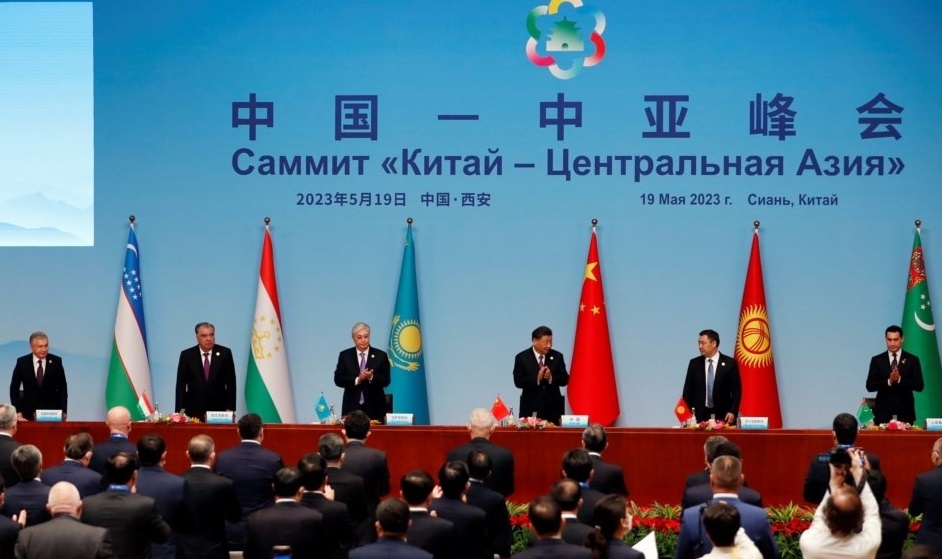
Simultaneously, two globally significant meetings took place in Hiroshima, Japan, and Xi’an, China: the G7 and the summit between China and the former Soviet Asian countries. On one hand, there was the old club of Western powers, dating back to the 1970s and effectively surpassed by the formation of the G20 in 1999. On the other hand, there were the new allies of one of the few definite winners of the Russo-Ukrainian war: China. In Hiroshima, essentially a NATO summit was held, given the agendas and positions of the participants, which were all the same. Ukraine was a prominent topic, as well as Taiwan and Palestine, with a brief mention of climate change at the end of the list. In Xi’an, the ancient Chinese capital, leaders from China, Kazakhstan, Kyrgyzstan, Tajikistan, Turkmenistan, and Uzbekistan discussed business matters, but also addressed new balances of power. China, which has been investing in Central Asia for some time now—a key region for the Belt and Road Initiative—decided to boost its involvement by pledging $4 billion in financial support and subsidies to these countries that, it can now be said, have moved out of Russia’s orbit. The signing of the Xi’an Declaration essentially marks their stable entry into Beijing’s sphere of influence.
Relations between China and its neighbors have never been easy, especially due to the situation of the Uighurs in Xinjiang, a persecuted and “reeducated” Muslim and Turkic minority by the Chinese state. However, in recent years, China has managed to turn problems into resources, unlike the participants of the G7 club who, lacking the strength to bring about change, end up turning potential into problems. Consider Africa, for instance—a great opportunity for China but merely a problem for Europe. The agenda in Hiroshima is, in fact, a list of grievances without hope. No actions are announced to address the issues that truly concern everyone, such as climate change, migration management, growing public debt everywhere, and prospects for peace in Ukraine.
Meanwhile, China has not only committed to investing in and serving as a platform for the revival of the group of former Soviet Asian countries, but it has also proposed a regional security pact that includes respect for different geopolitical spheres. This is something that, for example, has not been achieved between the European Union and Russia in the past. These are different approaches to international relations: in one case, the burden of imperial and colonial past weighs heavily, now definitively fading away; in the other, pragmatism emerges from those who know that in order to strengthen themselves, they must fly low and that they do not face true antagonists but rather wealthy clients—countries that often distrust Beijing but cannot do without it, having transferred their manufacturing capacity to China since the dawn of the industrial revolution.
Overall, Hiroshima and Xi’an represent two sides of the same coin—the coin of globalization. On one hand, there is the fear of no longer “counting” as before, coupled with the inability to overcome the arrogance of the past. On the other hand, there is the long-term vision and more modest approach of the weaver who, methodically and without getting carried away, achieves one result after another. This is because they have more to offer than mere rhetoric; they have tangible business deals. Ultimately, China has already become a pillar of the emerging new world order.

 alfredosomoza